Classical Compare & Contrast weekend with Nicholas Walker – mixed ability

We’re delighted to welcome back concert pianist and Royal Academy lecturer Nicholas Walker to share his extensive knowledge of the classical era during this mixed ability weekend course.
Acclaimed as a “prodigy… of exceptional artistry” (Evening Standard), Nicholas is renowned for his virtuosic flair and sensitive musicianship – which he generously shares with Finchcocks guests during this weekend course!
The classical period (~1750-1820) gave pianists in particular a vast repertoire of beautiful music, much of it well within the reach of the amateur, but not at the expense of depth of meaning and feeling. Even when a player finds the more technically challenging works difficult, the musical experience is nevertheless thrilling.
The classical style has its roots in opera, particularly comic opera, and many writers of comic operas also wrote for the keyboard, such as Galuppi, Paisello, Cimarosa, Johann Christian Bach and Georg Benda, to name a few; their works are well worth exploring. Mozart’s greatest music is to be found, arguably, in his operas, but opera permeates all his other works in the way themes are structured and juxtaposed, and the feeling (Affekt in German) in Mozart is particularly human and often vulnerable; Mozart’s handling of vulnerability is without peer.
There is another strand in classical music, which has its roots partly in C. P. E. Bach and partly in galant instrumental writing (concerto grosso and the trio sonata) and one can see these influences in Haydn, J. C. Bach, Hummel, Daniel Gottlob Türk and others. Haydn also wrote operas but, beautiful though they are, his finest works are to be found elsewhere, including his piano sonatas, which display an astonishing range of invention, wit and pathos. Haydn and Beethoven have a great deal in common.
One should also take into account the contribution of what Nicholas Temperley called “The London Piano School” (he published 20 volumes of this music), now out of print, but many of the composers he writes about can be found on IMSLP. There is some really fine music in this genre by Clementi, Cramer, George Pinto, Cipriani Potter, Philip Cogan, who also wrote operas, and of course, Dussek. Beethoven was definitely influenced by Clementi and Dussek, and greatly admired Cramer. This is music well worth seeking out, as are the composers on whose works Beethoven wrote variations; not all of them left a body of keyboard music, but André Grétry, the composer of many operas, left a manual of improvisation.
Preparation
You are of course welcome to bring music by Haydn, Mozart, Beethoven and Schubert, but it’s well worth having a look at some of the music mentioned above, as knowledge of other composers of the period enhances your understanding of the more famous works.
Nicholas would highly recommend Türk’s “Sixty pieces for aspiring players” books 1 and 2, published by the ABRSM. This book is a manual in classical taste, feeling, style and ornamentation, and the book illuminates the meaning of gestures and figuration common to all classical composers. None of the pieces are difficult, but every page is a joy, full of intelligence and wit.
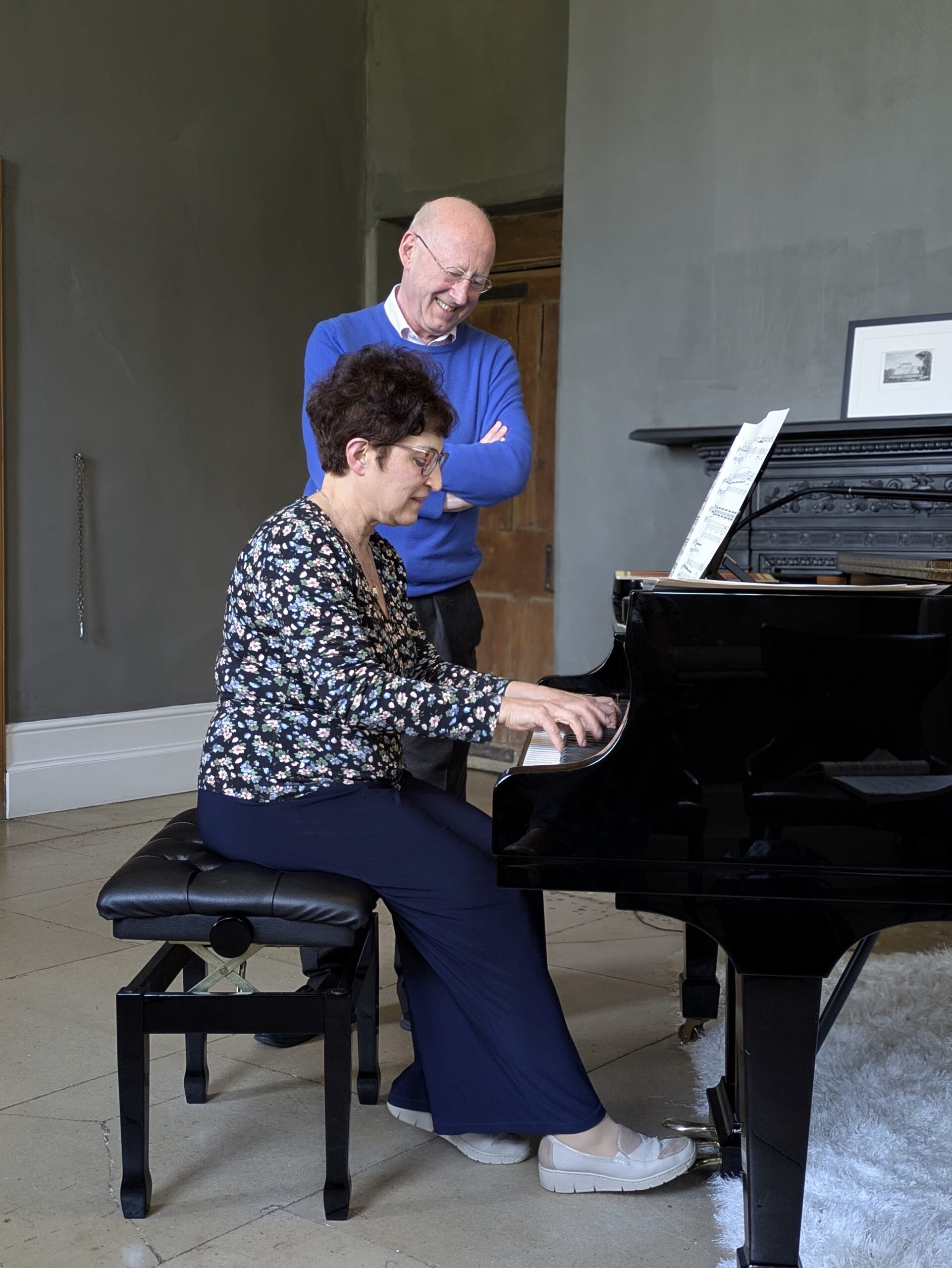
The Classical Compare & Constrast weekend will follow our usual format, incorporating an interactive workshop on both Saturday and Sunday mornings and will include:
Workshop 1: The sound
The piano changed so much during the 18th century, and it is only with the invention of Samual érard’s double escapement action 1820 that something like the modern grand piano begins to
emerge. What we know as the modern grand only really dates from the early to mid-1870s, and is a very different instrument from the pianos that Mozart, Haydn and Beethoven knew. This workshop explores how to use all the resources of the modern piano to create a sound world that is faithful to the composer’s intentions.
There is also the question of articulation: how “chopped up” should the sound be? Beethoven thought Mozart’s playing was too non-legato, so one can appreciate that not all composers require the same approach.
Participants are invited to bring any examples of repertoire, even if just a phrase or two, to the session and share their experiences with all.
Workshop 2: Ornamentation
Ornamentation also changed a great deal during the 18th century, and it varies according to composer, region, and period. Why does music have ornamentation? What is being ornamented? How fast does the ornament need to be? These are just some questions that arise, and no doubt participants will have lots more. Bring along your most vexations ornaments!
Related to this is the question of improvisation, about which C. P. E. Bach wrote a chapter in his famous book, “Essay on the True Art of Playing Keyboard Instruments”, in which he shows that improvisation starts with the ornamentation of simple harmonic progressions.
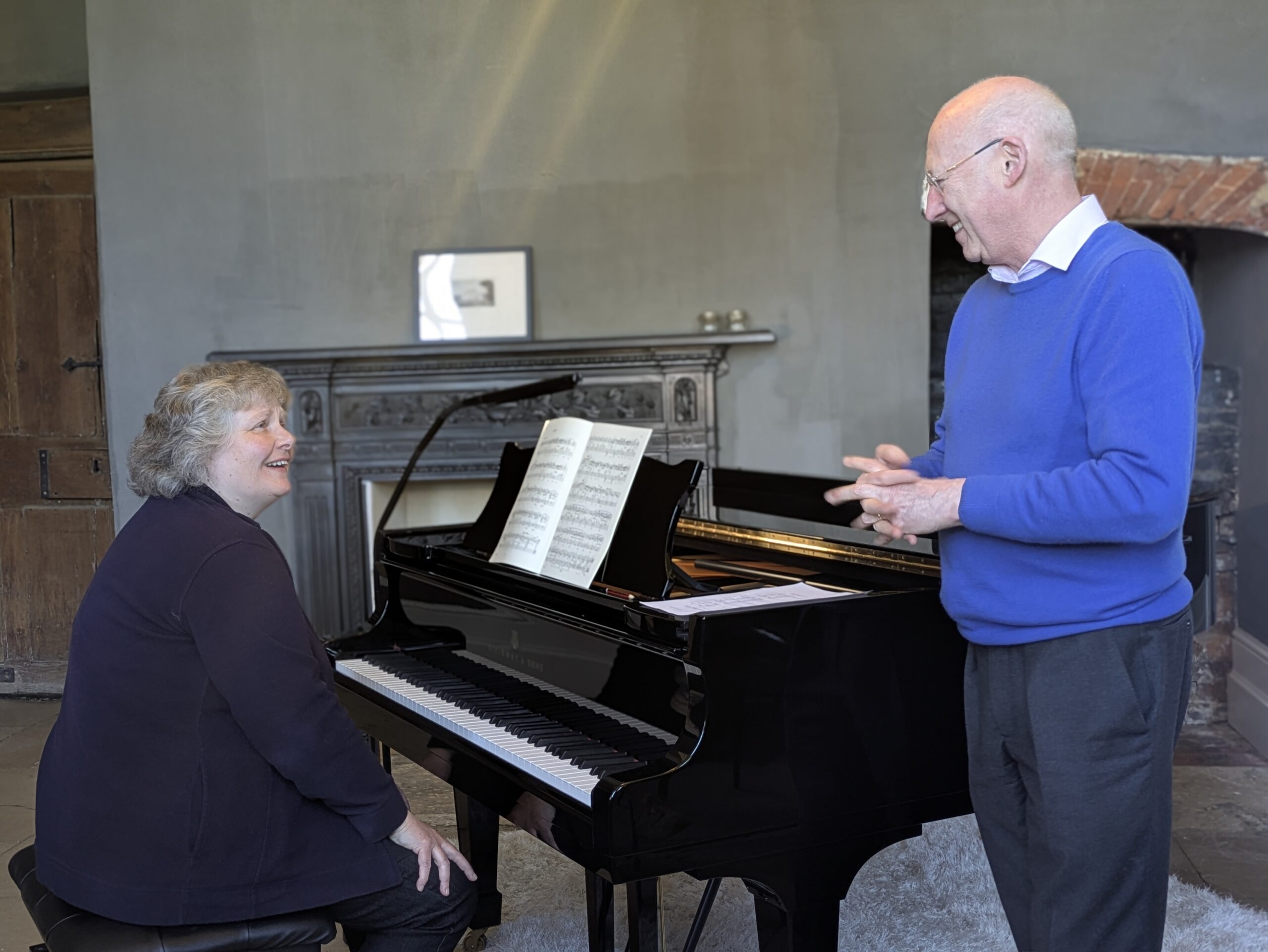
After these, time will be spent in private practice, one-to-one tuition with Nicholas – or an open lesson performance class in our Steinway recital room.
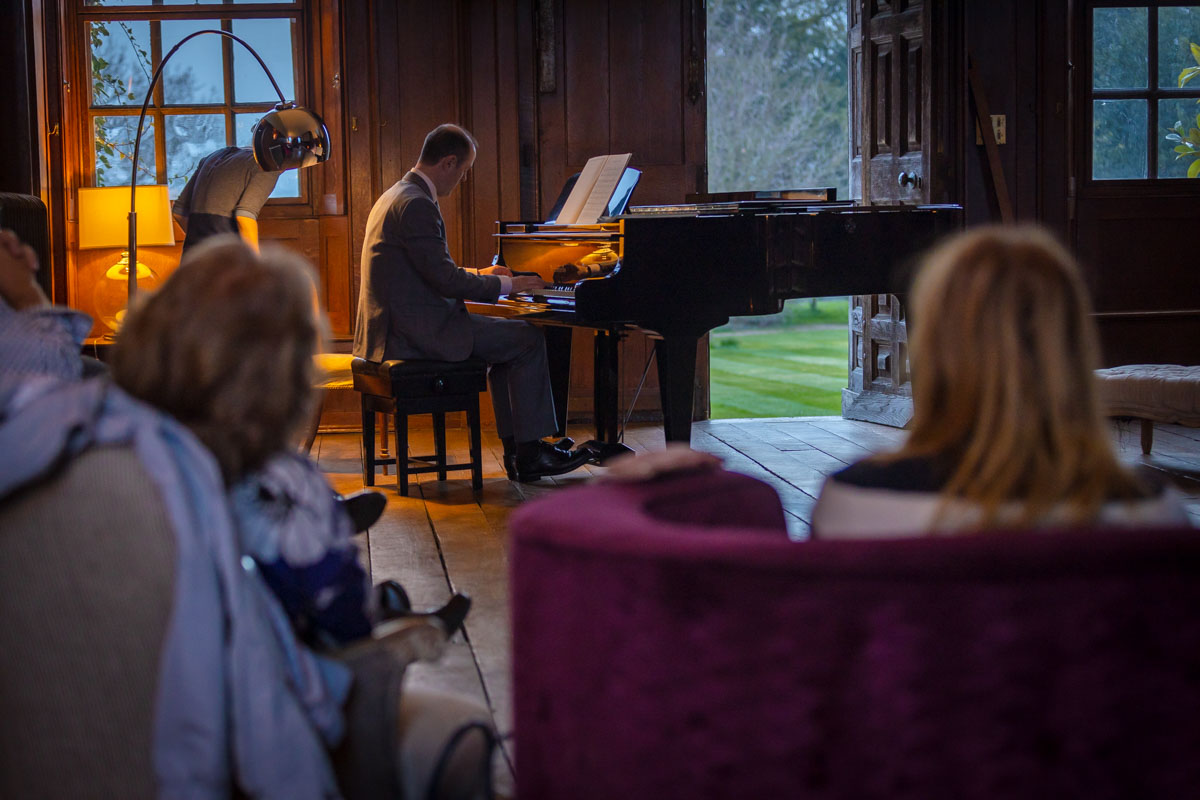
The highlight of a weekend course is often our Saturday evening tutor recital-talk in the house’s main hall. Nicholas will present and play some of his classical repertoire, including Mozart’s A minor Rondo.
On this weekend course, guests will:
- Have the chance to play in and observe two performance masterclasses.
- Will receive a one-to-one lesson with Nicholas.
- Enjoy access to play on our 9 grand pianos anytime between 7am and 8pm. (There are enough pianos to go round that everyone can play a piano at any given time.)
- Experience a private salon concert of music by Balakirev, Tchaikovsky and Rachmaninoff in the main hall of the family home, performed by Nicholas.
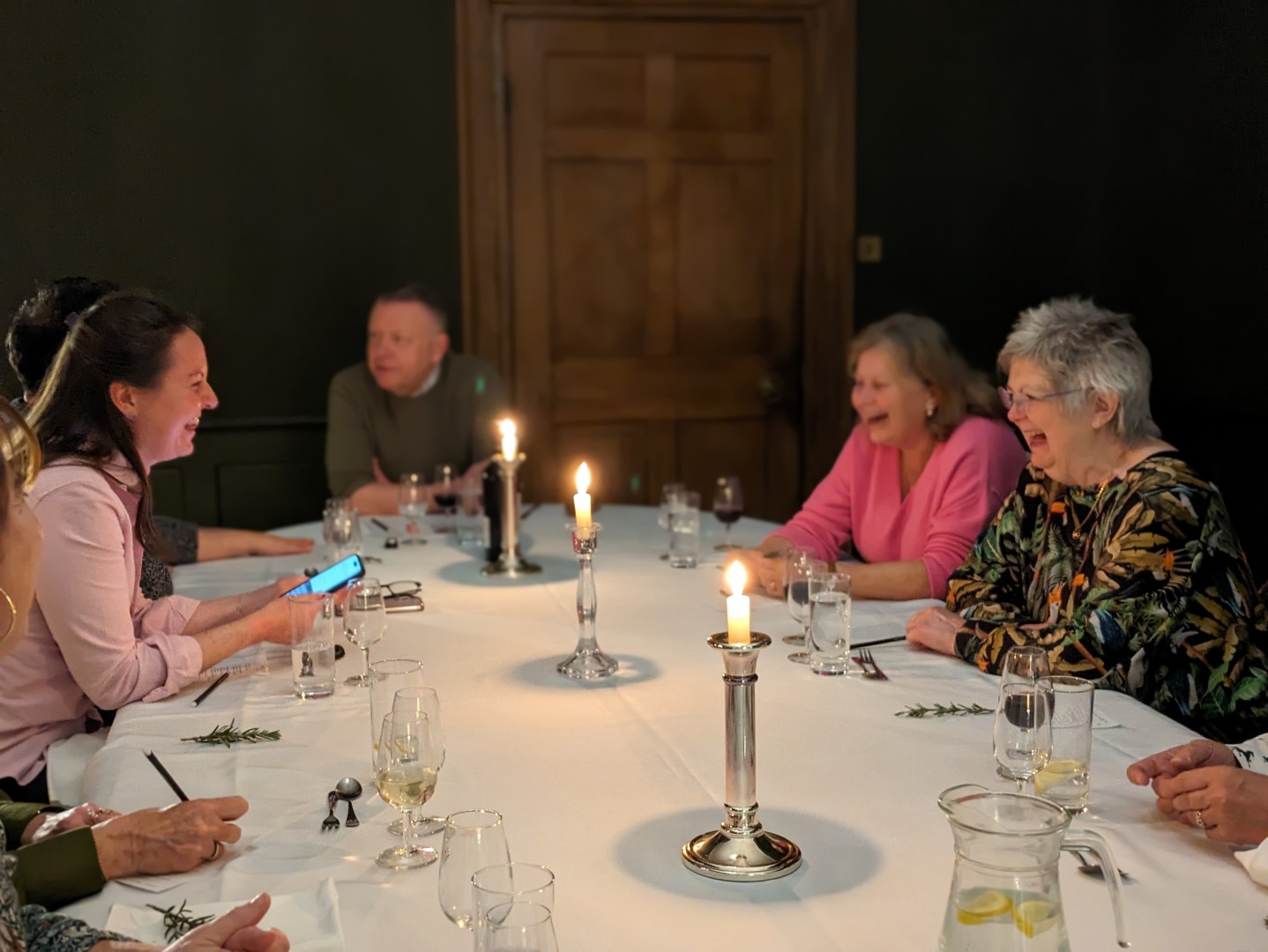
- Join and socialise with a group 8 fellow piano enthusiasts during lunch and dinner.
- Dine in style with lunches and three course dinners prepared by our fabulous chef.
- Experience the Finchcocks bubble, hailed as a “paradise for pianists” by BBC Music Magazine and stay in a grade 1 listed country manor.

Nicholas Walker
Hailed by the London Evening Standard as a ‘prodigy, of awesome technical fluency backed by exceptional artistry’, Nicholas Walker possesses a rare combination of talents combining sensitivity with ‘the flair of a full scale virtuoso and a sparkling intelligence’ (BBC Music Magazine).
He studied at the Royal Academy of Music, where he won all the major awards for both piano and composition, and subsequently at the Moscow Conservatoire.
While still a student in Moscow, he won the First Newport International Piano Competition and has since played with many British Orchestras, including the City of Birmingham and National Symphony Orchestras, the Royal Philharmonic, London Mozart Players, the London Festival and New Queen’s Hall Orchestras, the Philharmonia and the BBC National Symphony Orchestra of Wales. As well as performing in all the major London concert halls, he has played in North and South America, France, Germany, Switzerland, Italy, Scandinavia, Australia and Russia. He has recorded for BBC Radio 3, Cirrus, ASV, BMG Arte Nova, Chandos, Toccata Classics and Naxos Grand Piano. Equally at home in chamber music, he is sought after as an imaginative and sensitive accompanist, and his CD with Lydia Mordkovitch of Russian violin music was Daily Telegraph CD of the week.
Although Walker’s performances of Beethoven have brought him special notice, and his performances of the lyrical and late romantic piano music have also been singled out for the highest praise, it is for his championing of the cause of the neglected leader of ‘The Mighty Handful’, Mili Alexei Balakirev, that he is best known. Described by the Financial Times as ‘the nearest thing to a natural Balakirev performer’, Walker’s two discs of Balakirev piano music for ASV (CD DCA 940 & 1048) received great critical acclaim, and he has also received high praise for his performances of other Russian composers, including his live recording of the Liapunov Sonata on Danacord (DACOCD 539), described by Jeremy Nicholas as ‘thrilling… a tour de force’
His now complete series for Naxos Grand Piano is however unique, in that it introduces music that has never before been performed or published, including a substantial sonata and works that Nicholas has finished off himself. All the CDs garnered enthusiastic reviews, and CD3 was CD of the week on Musiq3. James Harrington of the American Record Guide has called them the “reference set”; Damian Thompson, writing in the Spectator, said that the series “has to be heard to be believed”, while Jeremy Nicholas in the Gramophone described the playing as “bravura with integrity”.
His 2024 Wigmore Hall performances – two concerts with different all Balakirev programmes on the same day (surely a first!) – were greeted with acclaim by Barry Creasy – “A master at work”: https://www.musicomh.com/classical/reviews-classical/mily-balakirev-nicholas-walker-wigmore-hall
Nicholas’s next recording project is a double CD of all the Liszt etudes and the Sonata in B minor.

For booking enquiries, please contact fill in the form below.